Cybersecurity in the Age of AI: Threats, Trends & Preparedness
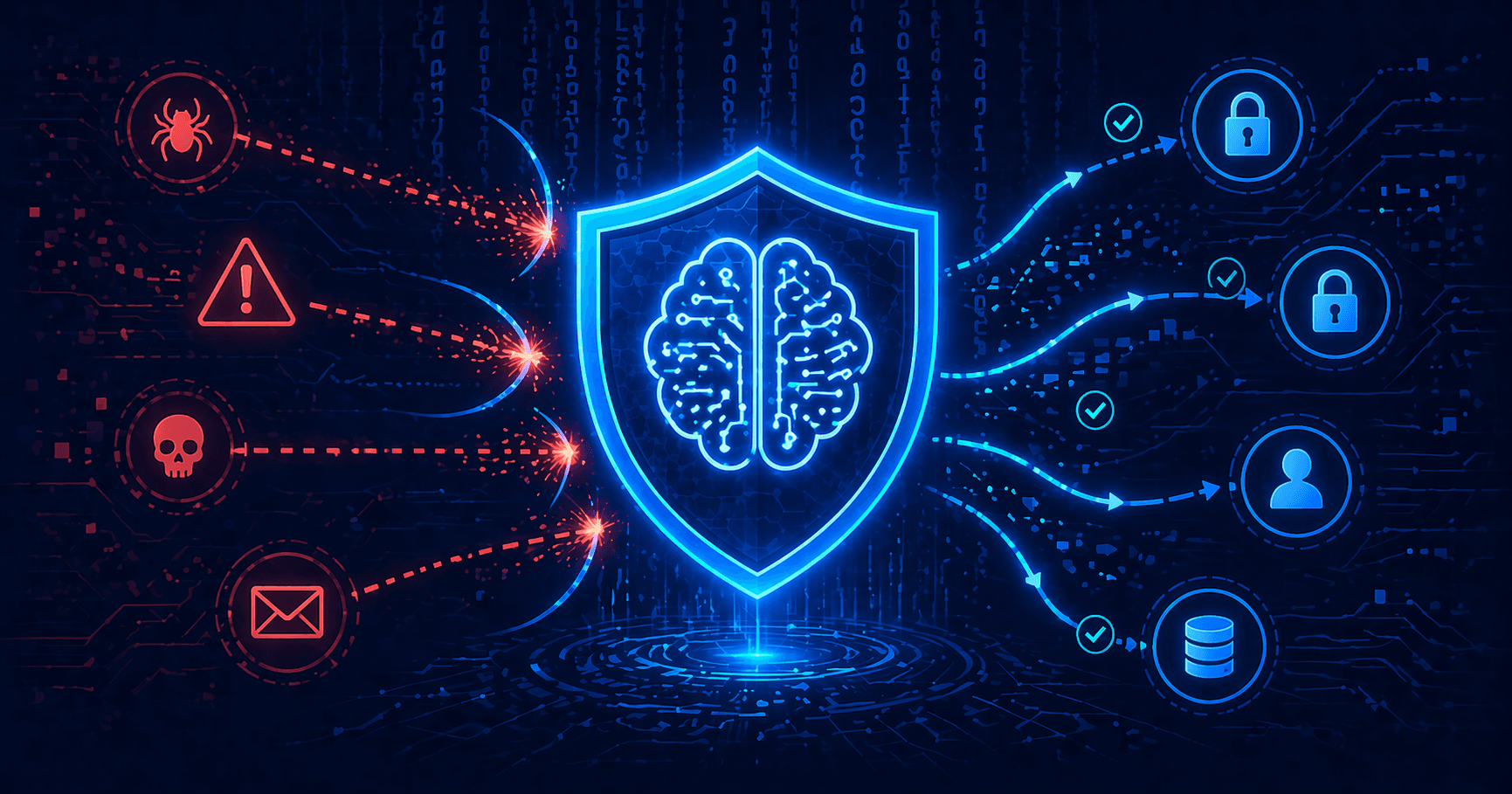
Artificial intelligence has fundamentally altered the cybersecurity landscape — and not in one direction. Attackers are using AI to launch more sophisticated, scalable, and harder-to-detect campaigns. Defenders are using AI to identify threats faster, automate response, and predict attacks before they happen.
The organisations that understand both sides of this equation will be the ones that survive the next decade of digital risk. The ones that don't will learn the hard way.
How AI Is Empowering Attackers
The barrier to launching sophisticated cyberattacks has dropped dramatically. What once required deep technical expertise and significant resources can now be partially automated with AI tools that are widely accessible.
Deepfakes and Social Engineering
AI-generated audio and video are no longer experimental curiosities — they are active weapons in social engineering campaigns. Attackers use deepfake technology to impersonate executives on video calls, generate convincing voice clones for phone-based fraud, and create synthetic identities that pass verification checks. In 2024 alone, multiple Indian enterprises reported financial losses from deepfake-driven CEO fraud.
Automated Phishing at Scale
Traditional phishing relied on generic templates that trained employees could spot. AI-powered phishing is different. Large language models generate highly personalised, context-aware messages that reference real projects, colleagues, and organisational details scraped from public sources. The result: phishing emails that are nearly indistinguishable from legitimate communication, deployed at a scale no human attacker could match.
Adversarial Machine Learning
As organisations deploy ML models for fraud detection, content moderation, and access control, attackers are learning to manipulate those models. Adversarial attacks involve subtly crafted inputs designed to fool AI systems — causing a fraud detection model to approve fraudulent transactions, or a malware classifier to label a malicious file as safe. This is an emerging threat that most businesses are not yet prepared for.
AI-Powered Reconnaissance
Attackers now use AI to automate vulnerability scanning, map network architectures, and identify the most promising attack vectors across an organisation's digital footprint — all in a fraction of the time manual reconnaissance would take.
How AI Strengthens Defence
The same capabilities that make AI dangerous in the hands of attackers make it indispensable for defenders.
Anomaly Detection and Behavioural Analytics
Traditional security tools rely on known signatures — they catch threats they've seen before. AI-driven systems learn what "normal" looks like for your network, your users, and your applications, then flag deviations in real time. A user logging in from an unusual location, accessing files they've never touched, at a time they've never been active — AI catches these patterns long before rule-based systems would.
Threat Intelligence and Prediction
AI systems can correlate threat data from millions of sources — dark web forums, vulnerability databases, global attack feeds — and identify emerging threats relevant to your specific industry, technology stack, and geography. This shifts cybersecurity from reactive to predictive.
Automated Incident Response
When an attack is detected, response time is everything. AI-powered security orchestration, automation, and response (SOAR) platforms can isolate compromised endpoints, revoke credentials, block malicious IPs, and trigger forensic data collection — all within seconds, without waiting for a human analyst.
Intelligent Vulnerability Management
AI helps prioritise the vulnerabilities that actually matter. Instead of overwhelming security teams with thousands of CVEs, AI models assess exploitability, asset criticality, and threat context to surface the vulnerabilities that pose genuine risk to your environment.
Key Trends Shaping Cybersecurity
Zero Trust Architecture
The perimeter-based security model — "trust everything inside the network" — is obsolete. Zero trust operates on a simple principle: never trust, always verify. Every user, device, and application must authenticate and be authorised for every access request, regardless of location.
For Indian enterprises undergoing rapid digital transformation, zero trust is not optional. With hybrid workforces, cloud-first architectures, and increasingly complex supply chains, there is no "inside" to trust anymore.
AI-Powered Security Operations Centres (SOC)
The traditional SOC model — staffed by analysts manually triaging thousands of alerts per day — doesn't scale. AI-powered SOCs use machine learning to correlate alerts, reduce false positives by up to 90%, and surface only the incidents that require human judgment. This frees skilled analysts to focus on genuine threats rather than drowning in noise.
Supply Chain Security
The SolarWinds and Log4j incidents demonstrated that your security is only as strong as your weakest vendor. Supply chain attacks are increasing in frequency and sophistication, targeting software dependencies, open-source libraries, and third-party service providers.
Organisations must implement software bill of materials (SBOM) tracking, continuous vendor risk assessment, and integrity verification for every component in their technology stack.
Regulatory Compliance as a Driver
India's Digital Personal Data Protection (DPDP) Act, sector-specific regulations from SEBI and RBI, and global frameworks like GDPR are raising the compliance bar. AI-driven compliance monitoring tools help organisations maintain continuous adherence rather than treating compliance as a periodic audit exercise.
Practical Steps Every Business Should Take
Cybersecurity preparedness is not about buying the most expensive tools. It's about disciplined execution of fundamentals, augmented by intelligent automation.
1. Assess Your Current Posture Honestly
Conduct a thorough security assessment that covers infrastructure, applications, data flows, access controls, and incident response readiness. Identify gaps without bias — the goal is clarity, not comfort.
2. Implement Zero Trust Incrementally
You don't need to overhaul your entire architecture overnight. Start with identity and access management — enforce multi-factor authentication, implement least-privilege access, and segment your network. Expand from there.
3. Invest in AI-Driven Security Tools
Deploy AI-powered endpoint detection and response (EDR), network detection and response (NDR), and security information and event management (SIEM) platforms. These tools multiply the effectiveness of your security team.
4. Train Your People Continuously
Technology alone isn't enough. Conduct regular, realistic security awareness training — including simulated phishing campaigns and incident response drills. Make security awareness part of your organisational culture, not an annual checkbox.
5. Build an Incident Response Playbook
When a breach occurs, confusion costs time, and time costs money. Document clear response procedures, assign roles, define communication protocols, and rehearse your plan regularly. The organisations that recover fastest are the ones that practiced before the crisis.
6. Secure Your Supply Chain
Audit your third-party vendors, implement contractual security requirements, monitor for compromised dependencies, and maintain an SBOM for your critical applications.
Sdevratech's Approach to Cybersecurity
At Sdevratech, cybersecurity isn't a service line we added to fill out a brochure. It's a foundational discipline inherited from our leadership's 35 years of experience in India's Defence sector — where security failures have consequences far beyond lost revenue.
Our approach is built on three principles:
- Security by design — We embed security into architecture, code, and operations from the first conversation, not as a retrofit after the system is built.
- Defence-grade rigour — Threat modelling, risk assessment, and compliance alignment are not optional activities. They are integral to every engagement.
- Practical, not theatrical — We focus on controls that genuinely reduce risk, not on generating impressive-looking dashboards that mask unaddressed vulnerabilities.
We help organisations across Cloud, Data, and AI engagements build security postures that are resilient, compliant, and sustainable — because in today's threat landscape, a secure foundation isn't a competitive advantage. It's a survival requirement.
The Bottom Line
AI has raised the stakes in cybersecurity for both attackers and defenders. The organisations that thrive will be those that embrace AI as a defensive multiplier, adopt zero-trust principles, invest in their people, and treat security as a continuous practice rather than a one-time project.
The threats are evolving. Your defences must evolve faster.
Ready to strengthen your cybersecurity posture? Connect with Sdevratech Technologies — Smart. Secure. Scalable.